
The Biochemical Paradox of Roasted Coffee Preservation
Specialty whole-bean coffee presents one of the most demanding technical challenges in flexible packaging engineering. The preservation problem stems from two opposing biochemical phenomena occurring simultaneously immediately post-roast:
- Massive Carbon Dioxide ($CO_2$) Degassing: During roasting, the thermal degradation of sugars and amino acids (Strecker degradation and pyrolysis) generates substantial volumes of carbon dioxide. Freshly roasted whole beans release between 2.5 to 5.5 liters of $CO_2$ per kilogram over the first 7 to 14 days. If sealed in an impermeable pouch without pressure relief, internal gas pressure will rapidly exceed 25 kPa (0.25 bar), causing catastrophic structural rupture or pouch ballooning on retail shelves.
- Extreme Oxidative & Moisture Degradation: Concurrently, roasted coffee beans contain delicate aromatic volatile oils (aldehydes, pyrazines, and thiols) and polyunsaturated lipids. Exposure to even microscopic levels of ambient oxygen ($O_2 > 0.5%$) triggers rapid lipid auto-oxidation, staling delicate terroir notes within 7 to 10 days. Furthermore, moisture absorption ($H_2O$) increases water activity ($a_w > 0.3$), hydrolyzing volatile esters and dulling acidity.
To resolve this paradox, flexible coffee packaging requires a balanced engineered system: a hermetic barrier substrate paired with a calibrated one-way degassing valve.
The Mechanics of Single-Way Degassing Valves
A one-way degassing valve functions as an internal pressure-relief check valve. Its primary engineering function is to permit positive outward gas venting while strictly preventing atmospheric air ingress.
Valve Anatomy and Pressure Thresholds
A precision packaging degassing valve consists of five micro-components:
- Valve Housing / Base Cap: Precision injection-molded polyethylene (PE) or polypropylene (PP), ultrasonically welded or heat-sealed directly onto the pouch interior sealant web.
- Sealing Diaphragm / Elastomeric Disc: A medical-grade silicone or EPDM flexible membrane designed with defined durometer hardness.
- Hydrocarbon Viscous Sealant Layer: A high-viscosity food-contact silicone oil or hydrocarbon fluid between the disc and valve seat that forms a capillary hermetic liquid seal.
- Filter Pad (Paper or Non-Woven Mesh): Traps micro-fines and coffee chaff to prevent particle bridging that could prop the valve disc open.
       [ OUTWARD CO2 DISCHARGE ]
                  ^
                  |
    +-------------|-------------+  <-- Valve Housing
    |      [Silicone Disc]      |
    |  === [Oil Sealant] ===    |
    |      [Filter Pad]         |
    +-------------+-------------+
                  |
       [ INTERNAL CO2 PRESSURE ]
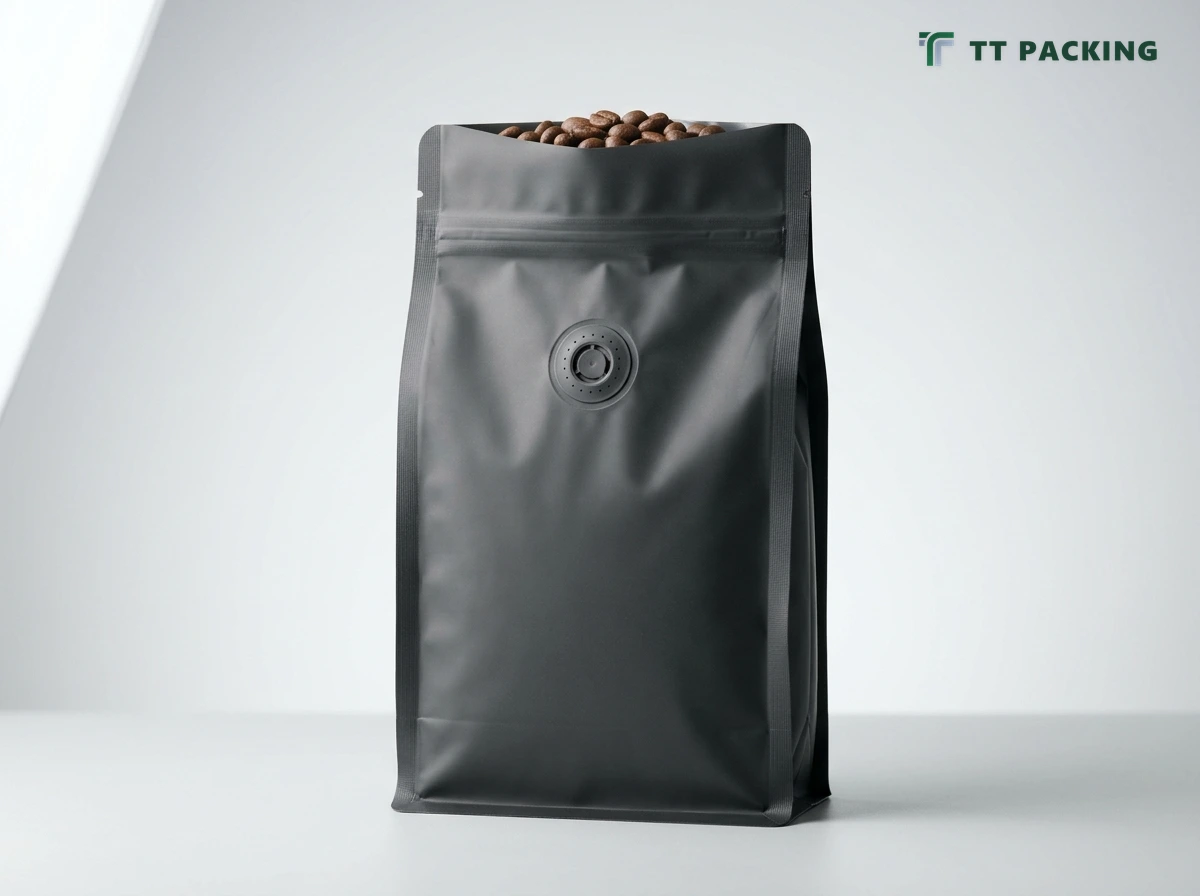 Figure 1: Automated thermal insertion of calibrated one-way degassing valve below resealable zipper with oil-capillary seal.
Critical Operating Pressure Parameters
Under industrial quality standards (such as TT Packing's automated line verification), valves must conform to strict physical pressure thresholds:
- Cracking / Opening Pressure ($P_{open}$): 2.0 to 5.0 mbar (0.029 to 0.072 psi). The valve must lift when internal pouch pressure rises slightly above ambient, preventing pouch inflation without allowing aroma loss.
- Resealing / Closing Pressure ($P_{close}$): $\le$ 1.0 mbar. Once internal pressure equalizes, the elastomeric disc must immediately snap back into the oil capillary bed.
- Reverse Air Ingress Rate ($R_{leak}$): Tested under negative suction pressure (-100 mbar). Leakage must remain $< 0.01$ cc/min, ensuring external oxygen cannot migrate backward into the headspace.
Engineering Tip: For automatic Form-Fill-Seal (FFS) lines and automated pouch loading machines, the degassing valve must be positioned 25mm to 35mm below the resealable zipper to guarantee that packaging gripper bars and thermal sealing jaws do not crush the valve disc during top-fill heat sealing.
Barrier Substrate Comparison: Foil vs. Metalized vs. Recyclable Mono-PE
The choice of barrier laminate determines the maximum shelf-life stability of the roast. We evaluate packaging substrates based on two standardized international testing protocols:
- ASTM D3985: Standard Test Method for Oxygen Gas Transmission Rate Through Plastic Film and Sheeting Using a Coulometric Sensor.
- ASTM F1249: Standard Test Method for Water Vapor Transmission Rate Through Plastic Film and Sheeting Using a Modulated Infrared Sensor.
Below is an empirical engineering comparison of four common flexible barrier structures:
| Laminate Structure | Total Thickness | OTR (ASTM D3985)cc/m²/24hr @ 23°C, 0% RH |
WVTR (ASTM F1249)g/m²/24hr @ 38°C, 90% RH |
Puncture Force (ASTM F1306) | Recommended Shelf Life | Sustainability Stream |
|---|---|---|---|---|---|---|
| PET / Aluminum Foil / LLDPE | 120 μm (4.7 mil) | < 0.05 (Impermeable) | < 0.05 (Impermeable) | > 28.5 N | 18 - 24 Months | Multi-material (Landfill / Incineration) |
| Matte BOPP / VMPET / PE | 130 μm (5.1 mil) | 0.5 - 1.2 | 0.4 - 0.8 | > 22.0 N | 12 - 15 Months | Metallized Film Stream |
| Kraft Paper / VMPET / LLDPE | 150 μm (5.9 mil) | 0.8 - 1.5 | 0.6 - 1.0 | > 18.0 N | 9 - 12 Months | Hybrid Paper/Plastic |
| MDO-PE / High-Barrier EVOH / PE | 115 μm (4.5 mil) | 0.8 - 1.8 | 1.2 - 2.0 | > 24.0 N | 9 - 12 Months | 100% Recyclable (RIC #4 PE Loop) |
Analysis of Substrate Selection
- Aluminum Foil Triplex (PET/AL/PE): Remains the absolute gold standard for specialty single-origin coffees requiring over 18 months of retail shelf life. The continuous aluminum foil core (typically 7 μm to 9 μm) provides a pinhole-free inorganic barrier that stops both oxygen and moisture migration entirely.
- Vacuum Metalized Polyester (VMPET): Uses a micro-thin vaporized aluminum deposit (OD 2.2 - 2.8). It offers excellent flex-crack resistance during shipping compared to solid foil, delivering a cost-efficient barrier for medium-turnover roasters.
- Monocycle All-PE Solution (MDO-PE/EVOH-PE): To comply with the European Union 2026 PPWR (Packaging and Packaging Waste Regulation), brand owners are transitioning to mono-material structures. By co-extruding EVOH barrier resins within a 100% polyethylene matrix, roasters achieve an acceptable barrier ($OTR < 2.0$) while qualifying for local curbside PE recycling streams.
Heat Seal Integrity & Lipid Contamination Failures (ASTM F88)
A high-barrier film is rendered useless if perimeter heat seals fail during storage or transit. Whole bean coffee poses an inherent packaging challenge: fine particulate coffee dust and migrating lipid oils settle onto the seal zone during high-speed vertical filling.
Seal Strength Benchmarking under ASTM F88
Under ASTM F88 / F88M (Standard Test Method for Seal Strength of Flexible Barrier Materials), seal performance is measured using an automated universal tensile tester:
- Target Seal Strength: $\ge$ 35.0 N / 15mm width.
- Failure Mode: Must exhibit cohesive substrate tear (film break) rather than adhesive delamination or peel failure.
       [ Upper Grip - Constant Rate 300 mm/min ]
                           ^
                           |
                     /===========\  <-- Top Seal Zone (15mm)
                    /             \
                   /   Substrate   \
                   \   Contour     /
                    \             /
                           |
                           v
       [ Lower Grip - Fixed Load Cell ]
Preventing Channel Leaks from Coffee Oils
When ordinary LDPE sealants contact coffee bean oils (caffeic fatty acids and cafestol), the oil acts as a heat sink, preventing polymer chain inter-diffusion and creating microscopic capillary channels.
Engineering Solution:
- Formulate the sealant web using Metallocene Linear Low-Density Polyethylene (mLLDPE) blended with plastomer resins.
- mLLDPE provides high Hot-Tack Strength and a wider thermal sealing window ($140^\circ\text{C}$ to $175^\circ\text{C}$), allowing the molten polymer to displace dust and encapsulate oil droplets without seal blistering.
Pouch Structural Formats: Sizing & Headspace Optimization
Selecting the appropriate pouch geometry balances shelf presentation, shipping volumetric efficiency, and degassing expansion buffer:
        STAND UP POUCH                   FLAT BOTTOM BOX POUCH
      (Doyen Round Bottom)               (8-Side Sealed Quad)

         +-----------+                       +-----------+
         |   Zipper  |                       |   Zipper  |
         |  (Valve)  |                       |  (Valve)  |
         |           |                       |           |
         |           |                       |           |
         \           /                       |           |
          \_________/                        +-----------+
         (Round Gusset)                     (Flat Base Box)
- Stand-Up Pouch with Doyen Bottom:
- Best suited for: 100g, 250g, and 340g (12 oz) specialty retail packages.
- Characteristics: Low tooling cost, compact foot-print, smooth face for large brand artwork.
- Flat Bottom Box Pouch (Quad Seal):
- Best suited for: 500g, 1kg, and 2.5kg wholesale food-service bags.
- Characteristics: Five distinct display panels (front, back, two side gussets, flat bottom). Stands perfectly erect like a rigid carton, maximizing shelf face real estate and pallet stacking stability.
Headspace Safety Factor: Always specify a 15% to 20% internal volume buffer (headspace) above the fill line. During high-altitude ground transport (mountain passes) or unpressurized air freight, atmospheric pressure drops, causing transient gas expansion before the degassing valve equalizes.
5-Point Quality Assurance Checklist for Sourcing Coffee Packaging
Before approving mass production of custom printed barrier coffee bags, ensure your supplier provides verifiable testing certification:
- OTR / WVTR Batch Calibration Certificate: Verified testing reports referencing ASTM D3985 and ASTM F1249 on actual printed and laminated material.
- Valve Leakage & Pressure Tolerance Test: In-line vacuum chamber bubble emission test (ASTM D3078) to confirm zero negative back-leakage.
- Seal Hot-Tack Verification: Minimum 35 N/15mm tensile seal strength under ASTM F88.
- Food Contact Regulatory Compliance: FDA 21 CFR 177.1520 (US Food Contact) and EU Regulation (EU) No 10/2011 compliance certificates.
- Transit Puncture & Drop Test: ASTM D5276 free-fall drop testing from 1.2 meters onto steel plates to verify pouch corner and gusset integrity.
Need Engineering Support for Your Coffee Packaging Line?
TT Packing operates Class-100,000 cleanroom production lines with in-line valve applicators and certified ASTM analytical laboratories.
Whether you require traditional foil barrier stand-up pouches or 100% recyclable mono-PE degassing bags, our technical team provides:
- Free 3D dieline engineering and artwork prepress proofing within 24 hours.
- Physical material sample test kits (flat-rate express courier fee 100% credited against your first production purchase order).
- Flexible pilot runs starting from 500 pieces with digital printing, up to 1,000,000+ pieces with high-speed rotogravure presses.

Stand Up Pouches
Stand up pouches (Doypack) are the worldwide gold standard for consumer packaging. Engineered with an expandable bottom gusset that creates a rigid freestanding base, they maximize shelf presence while reducing shipping weight by up to 80% compared to rigid jars or tin cans.