
The Biochemical Thermodynamics of Post-Roast Degassing
During the industrial roasting of specialty coffee, cellular carbohydrates, chlorogenic acids, and amino acids undergo severe thermal pyrolysis and Strecker degradation. As internal bean temperatures surpass 200°C, the porous cellular matrix of the bean traps enormous volumes of carbon dioxide ($CO_2$), along with subtle volatile aromatic compounds including pyrazines, aldehydes, furans, and volatile sulfur thiols.
Immediately upon discharge from the roasting drum, whole coffee beans enter an active kinetic desorption phase:
- A typical specialty medium roast discharges between 2.5 and 3.8 liters of $CO_2$ per kilogram of coffee.
- Dark Italian and French roasts with extensive structural cellular breakdown release up to 5.5 liters of $CO_2$ per kilogram, with over 60% of this total volume liberated within the initial 48 to 72 hours post-quench.
       CO2 Release Profile Over Time (Liters / kg of Roasted Beans)
       6.0 |
       5.0 |                  . - - - - - - [ Dark Roast Plateau ~5.2 L/kg ]
       4.0 |            . - '
       3.0 |        . '                     [ Medium Roast Plateau ~3.4 L/kg ]
       2.0 |     .'
       1.0 |   /
       0.0 +---+-------+-------+-------+-------+-------+-------+
           0   24h     48h     72h     5d      7d      14d     28d
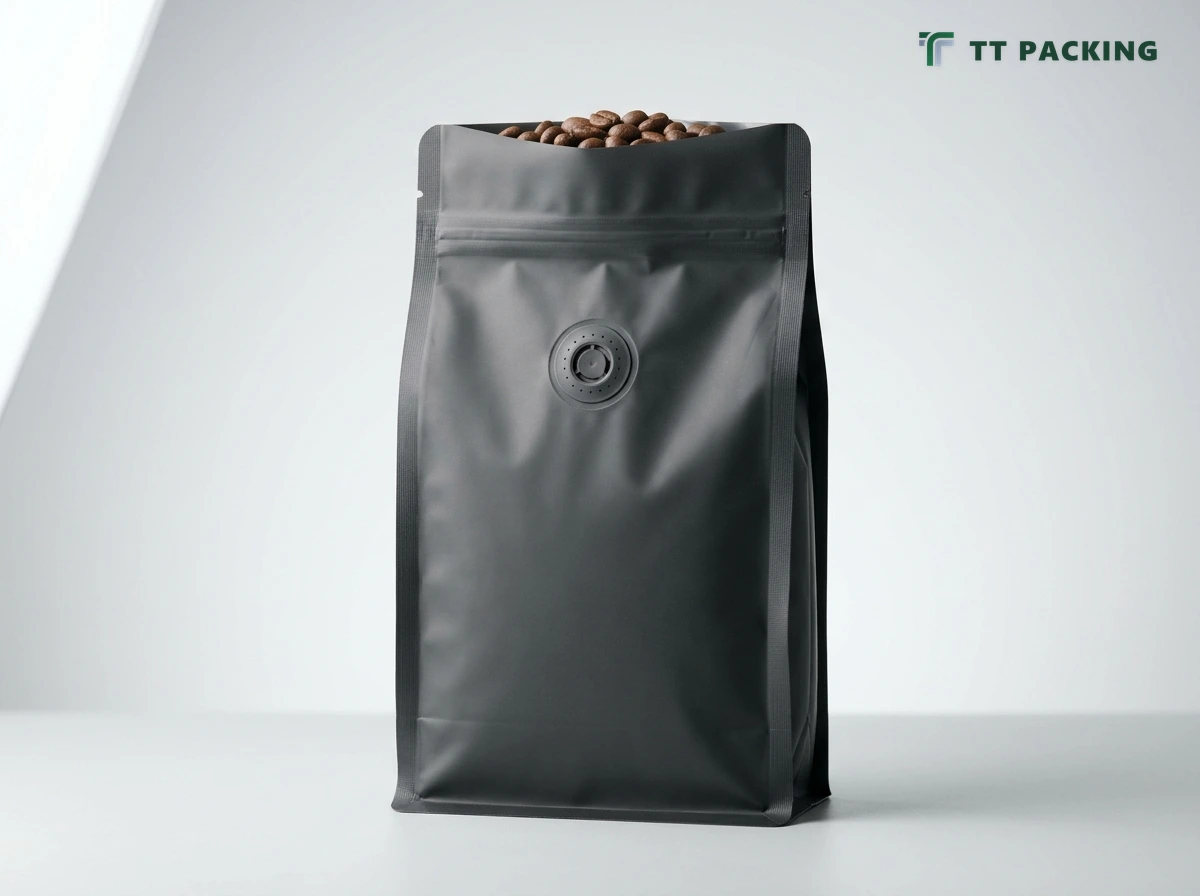 Figure 1: Kinetic pressure venting through an elastomeric one-way valve showing fluid-seal deflection and positive gas discharge.
If freshly roasted whole beans are hermetically packed into an impermeable barrier pouch without pressure equalization, internal pouch pressure rapidly climbs above 25 to 40 kPa (0.25 to 0.40 bar). Under this internal pneumatic load, pouch side gussets distort, bottom seals undergo peel stress, and package ballooning causes structural ruptures or pallet collapse in transit.
Conversely, leaving the packaging unsealed or vented through simple pinholes invites catastrophic oxidative decay: atmospheric oxygen ($O_2 > 0.5%$) and ambient moisture ($a_w > 0.35$) rapidly hydrolyze delicate lipids, inducing staling and rancidity in fewer than 10 days.
The engineered solution requires a calibrated one-way pressure-relief check valve integrated into a high-barrier laminate.
Valve Hydrodynamics: Opening Thresholds & Reverse Hermeticity
A precision packaging degassing valve operates on the principles of elastomeric deflection controlled by viscous liquid capillary surface tension.
1. Anatomy of the Check Valve Mechanism
The micro-engineered valve consists of five interlocking elements:
- Rigid Valve Body: Polyethylene (PE) or polypropylene (PP) injection-molded housing with circular venting orifices.
- Rubber/Silicone Disc: Precision-stamped elastomer calibrated for durometer hardness (50 Shore A) and dimensional thickness ($0.25 \pm 0.02$ mm).
- Viscous Sealant Fluid: High-purity polydimethylsiloxane (silicone oil) possessing a calibrated kinematic viscosity of 5,000 to 10,000 cSt at 25°C.
- Particulate Filter Scrim: Non-woven synthetic polyester or cellulose mesh preventing coffee chaff and micro-grind fines from contaminating the oil-elastomer interface.
2. Physical Venting Cycle and Pressure Thresholds
The valve acts dynamically across three distinct physical states:
- Resting Equilibrium ($P_{internal} \approx P_{ambient}$): The elastomeric disc rests flat against the polished valve seat. The capillary film of high-viscosity silicone fluid forms an unbroken hermetic meniscus, blocking gas molecules in both directions.
- Positive Relief Opening ($P_{internal} - P_{ambient} \ge P_{crack}$): As degassing proceeds, internal gas pressure builds. When the pressure differential reaches the cracking threshold of 2.0 to 5.0 mbar (0.029 to 0.072 psi), the positive force overcomes the surface tension of the oil and the elastic modulus of the disc. The disc deflects upward, discharging pure $CO_2$ into the atmosphere.
- Instantaneous Resealing ($P_{internal} - P_{ambient} < P_{reseal}$): As internal pressure drops to $\le 1.0$ mbar, the elastic memory of the silicone disc snaps it back into contact with the valve seat. The fluid meniscus re-establishes instantaneously, preventing atmospheric oxygen back-flow.
Under standardized vacuum leak testing (-100 mbar suction applied to the pouch exterior), the reverse air ingress rate must remain $< 0.01$ cc/min, guaranteeing long-term shelf preservation.
Barrier Material Selection: Triplex Foil vs. Recyclable Mono-PE
The one-way degassing valve must be paired with an engineered laminate substrate that preserves the headspace gas mixture over an extended shelf life of 12 to 24 months. The table below compares four major flexible packaging laminates evaluated under ASTM D3985 (Oxygen Transmission Rate) and ASTM F1249 (Water Vapor Transmission Rate):
| Laminate Construction | Total Gauge | OTR (ASTM D3985)cc/m²/24hr @ 23°C |
WVTR (ASTM F1249)g/m²/24hr @ 38°C, 90% RH |
Valve Welding Compatibility | Flex-Crack Resistance (ASTM F392) | Primary Commercial Application |
|---|---|---|---|---|---|---|
| Matte PET 12 / AL 7 / LLDPE 90 | 109 μm (4.3 mil) | < 0.05 (Zero Detectable) | < 0.05 (Zero Detectable) | Thermal / Ultrasonic PE Base | Moderate (Vulnerable to Pinholing) | Premium Whole-Bean Specialty Coffee (18-24 Mo) |
| Matte BOPP 19 / VMPET 12 / PE 80 | 111 μm (4.4 mil) | 0.45 - 0.90 | 0.35 - 0.65 | Thermal / Ultrasonic PE Base | Superior (High Flex Tolerance) | High-Turnover Retail Coffee Blends (12 Mo) |
| Natural Kraft 50g / VMPET 12 / PE 70 | 135 μm (5.3 mil) | 0.80 - 1.40 | 0.60 - 0.95 | Thermal PE Base | Moderate | Artisanal Organic / Craft Brand Identity (9-12 Mo) |
| MDO-PE 25 / Barrier EVOH / PE 75 | 100 μm (3.9 mil) | 0.90 - 1.80 | 1.20 - 1.90 | Ultrasonic (Mono-PE Closed Loop) | High | 100% Recyclable Mono-Polyethylene Coffee Pouch |
Machinery Integration: Ultrasonic Insertion vs. Conduction Thermal Stamping
In industrial flat-bottom box pouch manufacturing lines, degassing valves are applied automatically from continuous vibratory feeder bowls or reel-fed strips:
1. Thermal Conduction Heat Stamping
- Operating Method: A heated circular annular horn presses the valve body against the pouch sealant layer at temperatures between 160°C and 185°C with a dwell time of 600 to 900 ms.
- Limitations: Prolonged heat soak can cause thermal transfer into the silicone oil chamber, altering oil viscosity or inducing heat-shrink dimpling on the outer printed film surface.
2. Ultrasonic Welding (20 kHz / 35 kHz)
- Operating Method: High-frequency mechanical acoustic vibrations (amplitude $80,\mu\text{m}$) induce localized frictional intermolecular heating strictly at the energy directors of the valve base and pouch sealant interface.
- Advantages: Weld completion occurs within 180 to 260 ms without thermal conduction into the valve disc or reservoir fluid. Pouch exterior surfaces remain pristine with zero aesthetic blistering, making ultrasonic insertion the preferred approach for high-barrier foil and mono-material PE films.
       [ ULTRASONIC TITANIUM SONOTRODE - 20 kHz ]
                          |
                          v
       +---------------------------------------+  <-- Pouch Wall (100μm)
       +=======================================+  <-- Frictional Melt Interface
       |    Energy Director Ring of Valve      |
       |  +---------------------------------+  |
       |  |   [Silicone Disc & Oil Cavity]  |  |  <-- Zero Thermal Transfer Zone
       |  +---------------------------------+  |
       +---------------------------------------+
Headspace Volume Calculations & Altitude Transport Safety
When shipping whole-bean coffee through variable altitudes (e.g., air cargo transport or mountainous freight routes where ambient atmospheric pressure drops from 101.3 kPa at sea level to 75.0 kPa at 2,500 meters), internal gas expansion accelerates.
Packaging engineers must ensure sufficient pneumatic headspace buffer:
- Volumetric Headspace Allocation: Packaging design should maintain 15% to 20% headspace gas buffer above the settled bean volume.
- Valve Location Geometry: The degassing valve must be positioned 25 mm to 35 mm below the resealable zipper and centered along the pouch face. Placing the valve too close to the fill line risks dry bean particle blockage, while placing it too low impairs automated opening and filling grippers on rotary packing machinery.
5-Step Quality Assurance Protocol for Degassing Valve Pouch Batches
TT Packing validates all valve-equipped flat-bottom and quad-seal coffee pouches through five strict laboratory checkpoints:
- Test 1 - Cracking & Resealing Pressure Log: Automated differential micro-manometer logging confirming valve crack at $3.0 \pm 1.0$ mbar and full hermetic closure at $\ge 1.0$ mbar.
- Test 2 - Negative Suction Reverse Leakage: ASTM D3078 bubble emission vacuum chamber testing under -100 mbar negative pressure; zero continuous air stream permitted.
- Test 3 - Weld Tear Strength: ASTM F88 tensile test across the welded valve perimeter; failure must demonstrate parent substrate yield ($> 40$ N/15mm).
- Test 4 - Oil Viscosity & Migration Purity: High-performance liquid chromatography (HPLC) ensuring silicone oil conforms to FDA 21 CFR § 175.300 and does not migrate into product headspace.
- Test 5 - Vibration & Drop Durability: Free-fall drop testing from 1.2 meters per ASTM D5276 onto concrete; zero valve dislodgement or seam separation across 20 drops.
Optimize Your Coffee Packaging with TT Packing
TT Packing manufactures premium flat-bottom box pouches, side-gusset bags, and stand-up pouches equipped with automated valve insertion and rotogravure / digital printing systems.
Our technical support package includes:
- Complimentary 3D Box Pouch Dielines: Custom dielines engineered to your exact roasted bean density and fill volumes within 24 hours.
- Trial Valve Pouch Sample Packs: Comprehensive material swatch kits and pre-valved sample bags (shipping courier cost 100% credited against your initial production PO).
- Degassing Laboratory Testing: Headspace gas analysis ($O_2 / CO_2$ tracking) for your proprietary roasted coffee blends.

Flat Bottom Pouches
Flat bottom pouches (also called Box Pouches or 8-Side Sealed Pouches) represent the pinnacle of modern flexible packaging design. With a completely flat rectangular base and 5 dedicated printable panels (front, back, left side, right side, and bottom), they offer maximum retail shelf impact and total stability.