
The Nutritional & Biochemical Challenge in Premium Pet Food
The premium pet nutrition sector experienced rapid growth in 2021, driven by pet humanization, ancestral raw-meat diets, and cold-pressed grain-free formulations. Modern high-tier canine and feline diets incorporate elevated crude fat levels—frequently ranging from 18% to 26% total lipid content—derived from unsaturated marine oils (salmon, anchovy), poultry tallow, and cold-pressed flaxseed oils rich in omega-3 and omega-6 fatty acids.
While these unsaturated lipids provide vital cognitive, coat, and cardiovascular benefits, their molecular chemical structure makes them intensely vulnerable to oxidative rancidity.
When polyunsaturated fatty acids encounter oxygen, heat, and ultraviolet radiation, free-radical auto-oxidation triggers a catastrophic cascade:
- Primary Oxidation: Oxygen atoms attack double bonds in fatty acid chains, generating odorless, unstable lipid hydroperoxides.
- Secondary Oxidation: Hydroperoxides decompose into volatile secondary aromatic compounds—predominantly hexanal, 2,4-decadienal, and propanal.
    [ FREE-RADICAL LIPID AUTO-OXIDATION KINETIC PATHWAY ]

    Polyunsaturated Lipid (RH) + Energy / UV
                     |
                     v
             Free Radical (R•) + O2 (Permeating Pouch Wall)
                     |
                     v
             Peroxyl Radical (ROO•) + RH
                     |
                     v
             Lipid Hydroperoxide (ROOH)  <-- Measured by Peroxide Value (PV)
                     |
                     +---> Chain Cleavage (Secondary Degradation)
                                |
                                v
             Volatile Hexanal & Aldehydes (Foul Odor, Palatability Collapse)
For animals with acute olfactory systems—dogs possess up to 300 million olfactory receptors compared to humans' 6 million—minute traces of secondary hexanal (concentrations as low as 0.05 parts per million) trigger immediate food aversion and refusal to eat. Furthermore, consuming oxidized fats degrades fat-soluble vitamins (A, D, E), causing hepatic distress and chronic systemic inflammation.
Preserving pet food palatability for a guaranteed 18-month commercial shelf life requires packaging that acts as an impermeable physical barrier against oxygen ingress, moisture absorption, grease permeation, and volatile aroma loss.
Gas Barrier Kinetics & Headspace Gas Dynamics
Standard single-ply or unbarrier flexible plastics fail to protect high-fat dry kibble. Atmospheric oxygen permeating through pouch sidewalls continuously fuels the hydroperoxide decomposition cycle.
       [ HIGH-BARRIER MULTI-PLY PET FOOD LAMINATE ARCHITECTURE ]

     Exterior Protective Web: Matte BOPP or Gloss PET (12 - 19 μm)
     +-----------------------------------------------------------+
     | Lamination Adhesive: High-Solids Polyurethane             |
     +-----------------------------------------------------------+
     Barrier Core: Metallized PET (VMPET 12μm) or Aluminum Foil (7μm)
     +-----------------------------------------------------------+
     | Lamination Adhesive: Pure Aliphatic Chemical-Resistant Polyurethane
     +-----------------------------------------------------------+
     Structural Reinforcement: Biaxially Oriented Nylon (BOPA 15μm)
     +-----------------------------------------------------------+
     | Co-Extruded Tie Layer / Acid Copolymer                    |
     +-----------------------------------------------------------+
     Grease-Resistant Sealant Web: Metallocene LLDPE with Anti-Ooze (90 - 130 μm)
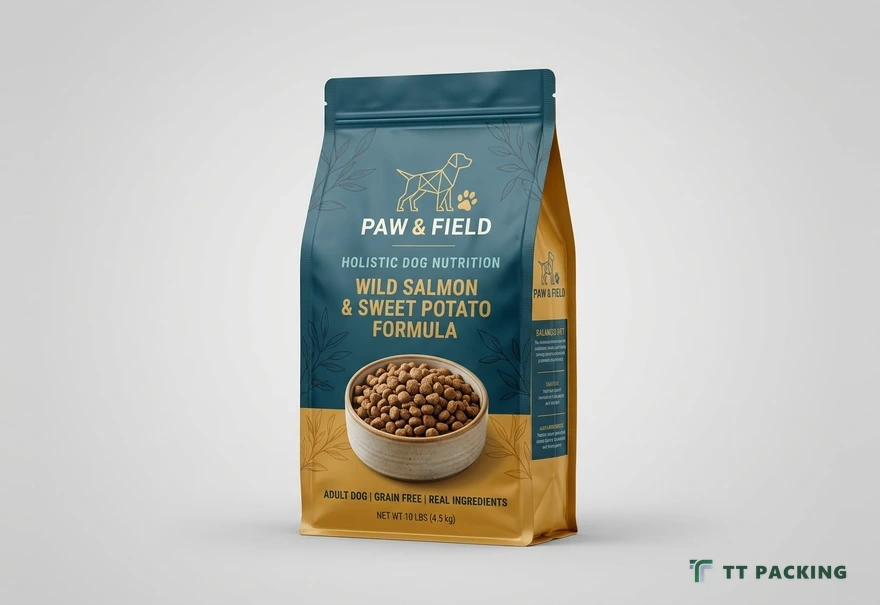 Figure 1: Multi-ply engineered barrier structure preventing lipid oil migration and secondary hexanal degradation.
1. Oxygen Transmission Rate (OTR) Thresholds
To maintain the Peroxide Value (PV) of high-fat kibble below the critical rancidity limit of 10 meq/kg fat over 18 months at 25°C:
- The overall laminate must deliver an Oxygen Transmission Rate of $< 0.50 ext{ cc/m}^2/ ext{24hr}$ per ASTM D3985.
- Metallized PET (VMPET) structures achieve $0.8 ext{ to } 1.2 ext{ cc/m}^2/ ext{24hr}$, suitable for treats and medium-fat dry formulas.
- Zero-tolerance super-premium formulations require an Aluminum Foil (AL 7 $\mu$m) core, which drives OTR down to $< 0.05 ext{ cc/m}^2/ ext{24hr}$, blocking all photonic and gas transmission.
2. Moisture Barrier & Kibble Texture Crispness
Kibble must maintain a water activity ($a_w$) between 0.55 and 0.65. If water activity falls below 0.50, kibble becomes brittle and crumbles into fine unpalatable dust; if $a_w$ exceeds 0.70, mold spores (Aspergillus and Penicillium) proliferate.
- The laminate must deliver a Water Vapor Transmission Rate of $< 0.50 ext{ g/m}^2/ ext{24hr}$ per ASTM F1249 to ensure microbial stability in humid tropical retail channels.
Oil Migration Resistance: Overcoming Delamination from Free Fats
A common packaging failure in 5kg to 15kg pet food bags is delamination caused by oil migration:
- Free triglycerides and short-chain fatty acids from poultry and fish fat migrate through micro-pores in the polyethylene inner sealant layer.
- Once fat reaches the polyurethane lamination adhesive interface, it attacks ester bonds in the adhesive, causing the polyethylene layer to bubble, blister, and peel away from the barrier foil (loss of lamination bond strength).
- TT Packing Solution: We formulate the inner contact layer using mLLDPE blended with polyolefin plastomers (POP) and specialized ethylene-acrylic acid (EAA) or ionomer tie resins. This high-density crystal structure prevents oil swelling and maintains lamination peel bond strength $> 4.5 ext{ N/15mm}$ even after prolonged contact with boiling chicken fat.
Technical Comparison: 4 Pet Food Packaging Laminates
The table below contrasts mechanical integrity, barrier parameters, and burst resistance across four flexible barrier constructions evaluated under ASTM D3985, ASTM F1249, and ASTM F1140:
| Laminate Construction | Total Thickness | OTR (ASTM D3985)cc/m²/24hr @ 23°C |
WVTR (ASTM F1249)g/m²/24hr @ 38°C |
Lamination Bond (ASTM D1876) | Pouch Burst Pressure (ASTM F1140 - 10kg Bag) | Recommended Pet Food Format |
|---|---|---|---|---|---|---|
| PET 12 / AL 7 / BOPA 15 / PE 110 | 144 μm (5.7 mil) | < 0.05 (Impermeable) | < 0.05 (Impermeable) | > 5.2 N/15mm | > 120 kPa (Heavy Duty) | Super-Premium 5kg-15kg High-Fat Dog Kibble |
| Matte BOPP 19 / VMPET 12 / PE 90 | 121 μm (4.8 mil) | 0.85 - 1.20 | 0.45 - 0.75 | 3.8 N/15mm | > 85 kPa | 1kg - 3kg Dry Treats & Baked Biscuits |
| PET 12 / EVOH-PE 100 (Clear) | 112 μm (4.4 mil) | 1.10 - 1.80 | 1.20 - 1.60 | 4.2 N/15mm | > 75 kPa | Jerky Strips & Dental Chews (Window View) |
| MDO-PE 25 / Mono-PE 110 (Recyclable) | 135 μm (5.3 mil) | 1.20 - 2.00 | 1.40 - 1.90 | 4.6 N/15mm | > 95 kPa | 100% Recyclable Eco-Friendly Pet Nutrition |
Structural Pouch Geometries for Bulk Formats (3kg - 15kg)
Bulk pet food packages face immense gravitational, palletization, and handling loads. TT Packing engineers two primary structural geometries:
1. Flat Bottom Box Pouches (Block Bottom Bags)
- Volumetric Efficiency: Features 5 printable panels (front, back, left gusset, right gusset, bottom). The rectangular flat base provides 100% upright stability on retail shelves, eliminating leaning and shelf tip-overs.
- Pallet Utilization: Cuboid form factors nest tightly in shipping cartons and pallet arrays, increasing container loading volume by up to 22% compared to standard pillow bags.
2. Quad-Seal Side Gusset Pouches
- Four-Corner Vertical Seals: Reinforced seals on all four corners act as rigid structural columns, preventing vertical bag slump and creasing when stacked 10 layers high on shipping pallets.
- Front-Panel Slider Zippers & De-Aeration Micro-Valves: Large 10kg bags require wide-mouth press-to-close or slider zippers. Integrated one-way maze venting valves allow trapped air to exhaust during pallet compression without permitting ambient oxygen back into the bag.
5-Point Quality Control Checklist for Pet Food Pouch Lots
TT Packing validates every commercial production run of pet food packaging against five certified laboratory checkpoints:
- Audit Step 1 - Hexanal Odor Migration Barrier Scan: Headspace Gas Chromatography-Mass Spectrometry (GC-MS) testing verifying zero aroma permeation and zero adhesive solvent taint per ASTM F1884.
- Audit Step 2 - Oil Migration & Delamination Resistance: Pouches filled with pure cod liver oil maintained at 50°C for 14 days; zero layer separation, blistering, or seal creep allowed.
- Audit Step 3 - Hydrostatic Drop Integrity (ASTM D5276): 10kg kibble-filled quad seal pouches dropped from 1.5 meters onto hard steel plate (6-side drop cycle); zero seam splits or corner punctures allowed across 20 cycles.
- Audit Step 4 - Seal Creep Under Constant Load: ASTM F88 seal tensile test at 60°C elevated temperature holding 2.5 kg dead weight for 4 hours simulating warm transit conditions.
- Audit Step 5 - Pinhole & Flex Resistance (ASTM F392): Foil-laminated webs subjected to 270 cycles of Gelbo flex rotation; OTR barrier retention must remain $< 0.15 ext{ cc/m}^2/ ext{24hr}$.
Upgrade Your Pet Nutrition Packaging with TT Packing
TT Packing manufactures heavy-duty flat-bottom pouches, quad-seal bags, and recyclable barrier pouches designed to keep high-fat pet foods fresh, fragrant, and appetizing.
Our pet packaging services include:
- Custom Volume CAD Dielines: Tailored dielines from 500g treat pouches up to 20kg bulk breeder bags with reinforced carry handles.
- High-Fat Sample Barrier Pouches: Production-grade sample pouches sent for real-fill lipid shelf life trials (express courier cost 100% credited against your initial production order).
- ASTM Test Certificates & Barrier Dossier: Certified oxygen permeation, burst pressure, and migration safety documentation for your retail compliance audits.

Flat Bottom Pouches
Flat bottom pouches (also called Box Pouches or 8-Side Sealed Pouches) represent the pinnacle of modern flexible packaging design. With a completely flat rectangular base and 5 dedicated printable panels (front, back, left side, right side, and bottom), they offer maximum retail shelf impact and total stability.