
The Industrial Transition to Clean, Solvent-Free Lamination
In late 2021, global flexible packaging manufacturing stood at a critical regulatory intersection. Escalating municipal limits on industrial Volatile Organic Compound (VOC) emissions, surging petrochemical solvent prices (ethyl acetate, methyl ethyl ketone), and strict food contact migration directives from the European Commission (EU Regulation No. 10/2011) forced packaging converters to re-evaluate their lamination technologies.
For decades, multi-ply barrier laminates relied on solvent-based polyurethane adhesives:
- Solvent-based adhesives dissolve polyurethane prepolymers in 60% to 70% ethyl acetate solvent.
- Drying these adhesives requires massive, energy-intensive hot-air drying tunnels (15 to 25 meters long) heated to 80°C - 100°C to evaporate the volatile solvent.
- Environmental & Economic Cost: Solvents emit significant quantities of VOCs that require multimillion-dollar Regenerative Thermal Oxidizers (RTOs) to incinerate. Incomplete drying risks dangerous solvent retention in the packaged food, causing off-flavors, toxic taint, and costly product recalls.
To achieve clean production, reduced energy footprints, and guaranteed food contact safety, modern converters have transitioned to 100% Solids Solventless Lamination.
This whitepaper examines the adhesive polymer chemistry, stoichiometric curing kinetics, equipment mechanics, and Primary Aromatic Amine (PAA) safety protocols governing high-performance solventless lamination at TT Packing.
Adhesive Chemistry: 100% Solids Polyurethane Dynamics
Unlike solvent-based systems, solventless laminating adhesives contain zero water and zero organic solvents. They consist of 100% reactive polyurethane prepolymers:
    [ TWO-COMPONENT SOLVENTLESS POLYURETHANE REACTION DYNAMICS ]

    Component A: Polyether / Polyester Polyol Prepolymer (Hydroxyl -OH Terminated)
                                +
    Component B: Diisocyanate Prepolymer (MDI / TDI Isocyanate -NCO Terminated)
                                |
             Precise Metered Mixing Ratio (e.g., 100 : 70 @ 45°C)
                                v
    [-O-R-O-CONH-R'-NHCO-]n  <-- Fully Polymerized Polyurethane Elastomer
                                |
          +---------------------+---------------------+
          |                                           |
          v                                           v
    Zero Solvent Evaporation             High Initial Cohesive Tack
    (No Hot Air Tunnel Required)         (Cures via Moisture & Heat in 48hr)
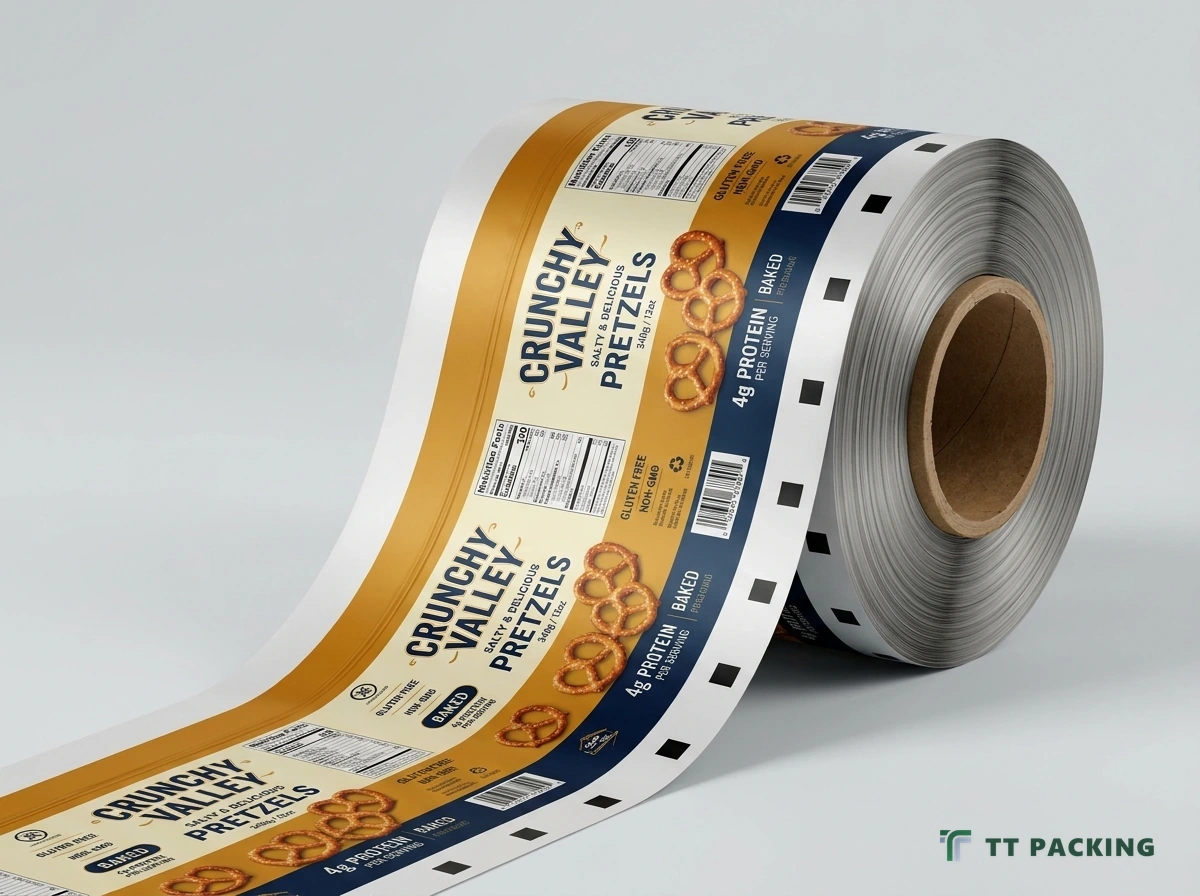 Figure 1: High-precision 5-roll coating nip applying an ultra-thin 1.2 to 1.8 g/m² solventless adhesive web.
1. High-Precision 5-Roll Metering System
Because solventless adhesives possess higher dynamic viscosities than solvent-borne liquids, they cannot be applied via simple gravure cylinder immersion. Instead, they pass through a heated 5-roll metering unit:
- Rolls 1 & 2 (Dosing Gap): Heated to 40°C - 45°C, two ceramic rollers maintain a calibrated gap of $15 ext{ to } 25 \ \mu ext{m}$, metering a microscopically thin adhesive film.
- Rolls 3 & 4 (Transfer & Application): Smooth oscillating chrome rollers distribute the adhesive into an ultra-uniform layer.
- Roll 5 (Rubber Application Nip): Transfers adhesive onto the primary film web at an exact coating weight of $1.2 ext{ to } 1.8 \ ext{g/m}^2$ (compared to $2.5 - 4.0 \ ext{g/m}^2$ for solvent-based adhesives), reducing adhesive resin consumption by up to 50%.
Primary Aromatic Amines (PAA): Chemistry & EU 10/2011 Compliance
The most critical chemical safety aspect of polyurethane lamination for food packaging is controlling Primary Aromatic Amines (PAAs):
       [ PAA HYDROLYSIS MECHANISM FROM UNREACTED MONOMERIC ISOCYANATE ]

     Unreacted Residual Monomeric Isocyanate (Aromatic -NCO)
                     |
                     +---> Moisture / Water (H2O) from Food or Ambient Air
                                |
                                v
               Unstable Carbamic Acid Intermediate
                                |
                                v  (Spontaneous Decarboxylation - CO2)
               Primary Aromatic Amine (PAA: e.g., MDA, TDA)
               [ CLASSIFIED AS POTENTIAL CARCINOGENS ]
1. The PAA Formation Hazard
When two-component polyurethane adhesives are formulated with aromatic isocyanates (such as MDI or TDI), trace unreacted monomeric isocyanates remain within the adhesive layer immediately following lamination.
- If food—particularly acidic or high-moisture foods like pasta sauces, pet stews, or fruit purees—is packed before cross-linking completes, water vapor migrates into the adhesive.
- Water hydrolyzes free isocyanate groups into Primary Aromatic Amines (such as 4,4'-methylenedianiline [MDA]), which can migrate into the foodstuff. PAAs are classified by IARC as known or suspected human carcinogens.
2. EU Regulation 10/2011 Compliance Standard
- Under EU 10/2011, the Specific Migration Limit (SML) for sum Primary Aromatic Amines is set at an ultra-trace threshold: $$ ext{Total PAA Migration} < 0.01 ext{ mg/kg food (or } < 2.0 \ \mu ext{g/kg / ppb)}$$
- TT Packing Curing SOP: Laminated master rolls are quarantined in climate-controlled hot curing rooms maintained at $40^\circ ext{C} \pm 2^\circ ext{C}$ and $40% - 50% ext{ RH}$ for 48 to 72 hours.
- Before release to pouch slitting, spectrophotometric diazotization testing verifies that residual monomeric isocyanates have fully reacted, driving PAA migration strictly below detectable laboratory limits ($< 2 ext{ ppb}$).
Technical Comparison: Solventless vs. Solvent-Based Lamination
The table below contrasts environmental impact, energy consumption, food contact safety, and converting metrics between solventless and solvent-based polyurethane systems:
| Operational Parameter | Solventless Polyurethane Lamination | Traditional Solvent-Based Polyurethane | Environmental & Operational Benefit |
|---|---|---|---|
| VOC Emissions | Zero VOC (0.0 kg/hr) | 120 - 250 kg/hr (Requires RTO Incinerator) | Eliminates atmospheric pollution & EPA compliance penalties |
| Solvent Retention (ASTM F1884) | $< 0.5 ext{ mg/m}^2$ (Zero Solvent Taint) | $2.5 - 8.0 ext{ mg/m}^2$ (Risk of Odor Taint) | Absolute purity for delicate coffee, dairy & chocolate |
| Energy Consumption | 18 - 25 kWh per 1,000 m² | 85 - 140 kWh per 1,000 m² (Drying Tunnels) | 75% reduction in industrial carbon energy footprint |
| Coating Weight Applied | 1.2 - 1.8 g/m² (Ultra-Thin) | 2.8 - 4.5 g/m² | 50% lower raw material resin consumption |
| Line Speed Capability | 350 - 450 m/min | 200 - 300 m/min (Limited by Dry Tunnel) | 40% higher manufacturing productivity |
| Initial Green Tack Strength | Moderate (Requires 24-48hr Curing) | High (Immediate Web Bond) | Requires post-lamination hot room staging |
| PAA Decay Cycle | Fast (Full Cure in 48hr @ 40°C) | Moderate to Slow | Certified food contact release within 3 days |
Optical Clarity: Eliminating Adhesive "Orange Peel" & Bubbles
A historical objection to solventless lamination was optical appearance: on transparent barrier pouches (such as PET/EVOH-PE), improperly applied solventless adhesive can exhibit an "orange peel" mottle or microscopic entrapped air bubbles:
TT Packing Technical Countermeasures:
- Dynamic Roller Temperature Profiling: Water-circulating temperature controllers maintain metering roll 1 at $42^\circ ext{C}$ and application roll 4 at $48^\circ ext{C}$, dropping adhesive dynamic viscosity to $< 800 ext{ mPa}\cdot ext{s}$ for smooth web wet-out.
- Servo-Driven Tension Synchronization: Closed-loop load-cell tension sensors monitor primary and secondary webs across the lamination nip with $\pm 0.5 ext{ N}$ accuracy, preventing micro-wrinkles and tunneling.
- High-Pressure Steel-Rubber Calender Nip: Pneumatic cylinders deliver a linear nip pressure of $> 6.5 ext{ bar}$, expelling all micro-air bubbles and achieving crystal-clear optical transparency ($< 3.0% ext{ haze}$ per ASTM D1003).
5-Point Quality Assurance SOP for Laminated Barrier Films
TT Packing validates all solventless laminated barrier rollstock through five strict laboratory checkpoints:
- Audit Step 1 - Residual Solvent Gas Chromatography (ASTM F1884): Headspace GC-MS thermal desorption analysis verifying total residual solvent is strictly $< 1.0 ext{ mg/m}^2$.
- Audit Step 2 - Photometric PAA Migration Assay (EU 10/2011): Food simulant migration extraction (3% acetic acid at 40°C for 10 days) analyzed via UV-Vis spectrophotometry; total PAA must be $< 2.0 \ \mu ext{g/kg}$ (below detection limit).
- Audit Step 3 - Lamination Bond Peel Strength (ASTM D1876 / ASTM F88): 15mm strip T-peel testing; bond strength must exceed $> 4.0 ext{ N/15mm}$ or demonstrate parent film substrate tear.
- Audit Step 4 - Optical Haze & Clarity Inspection (ASTM D1003): Spectrophotometric transmission verification ensuring total haze remains $< 3.5%$.
- Audit Step 5 - Boiling Water & Retort Delamination Challenge: Laminated test strips submerged in boiling water ($100^\circ ext{C}$) for 30 minutes; zero tunneling, blistering, or layer separation allowed.
Source Clean, Sustainable Barrier Packaging with TT Packing
TT Packing operates advanced high-speed solventless lamination machinery inside climate-controlled cleanroom production facilities, delivering high-barrier rollstock and pre-formed pouches engineered for food safety.
Our solventless packaging deliverables include:
- Engineered Multi-Ply Rollstock Formulations: Custom 2-ply, 3-ply, and 4-ply barrier laminations tailored to your product chemistry.
- Trial Barrier Rollstock Sample Rolls: Production sample rolls supplied for automated VFFS and HFFS packaging line trials (express courier cost 100% credited against your initial production order).
- EU 10/2011 & FDA Food Contact Dossier: Certified laboratory documentation verifying zero solvent retention and non-detectable PAA compliance for your regulatory filings.

Rollstock Film
Rollstock film is continuous flexible laminate supplied on standardized cores for high-speed automated packaging machinery. Formulated with precise Coefficient of Friction (COF) and high hot-tack strength, our rollstock ensures jam-free machine operation at speeds exceeding 150 bags per minute.